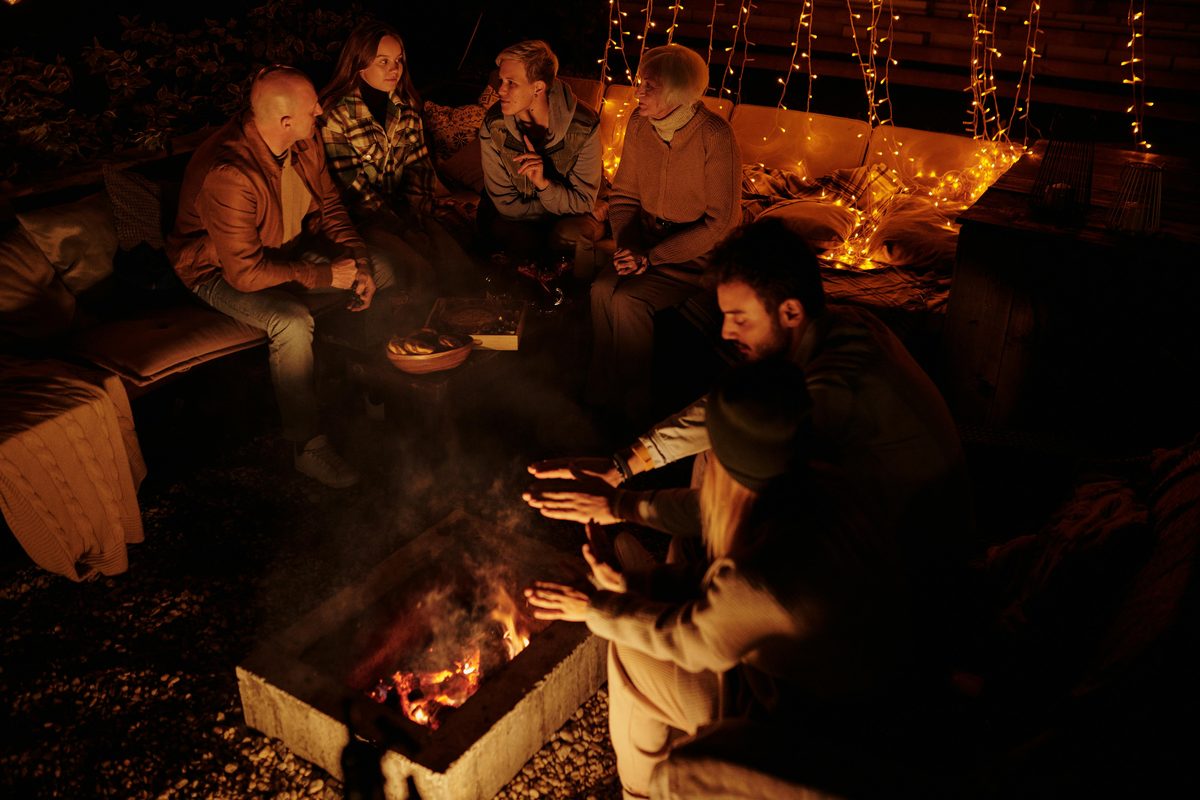
The evening gathering around a fire pit is one of life’s simple pleasures. But before you can enjoy those conversations by firelight, you need to decide: gas or wood? Both have passionate advocates, and both have a place in UK gardens. The right choice depends on what you value most.
The Quick Answer
Choose gas if: You want instant flames, no smoke, minimal cleanup, and ease of use. Perfect for regular use, smaller gardens, or when neighbours are close.
Choose wood if: You want authentic atmosphere, crackling sounds, genuine warmth, and that primal connection to fire. Accept the smoke, effort, and cleanup as part of the ritual.
Let’s explore both options in detail.
The Atmosphere Question
This is where most people start, and rightfully so. You’re buying an experience, not just a heat source.
Wood Fire Atmosphere
There’s something primal about a wood fire that gas simply cannot replicate:
- The sound: Crackling, popping, the occasional snap of splitting wood
- The smell: Woodsmoke carries memory and nostalgia
- The visual: Dancing flames, glowing embers, sparks rising into darkness
- The ritual: Building, feeding, tending - there’s active engagement
- The warmth: Intense, radiant heat you can feel in your bones
A wood fire demands attention. You’re not just sitting near it; you’re participating with it. That engagement is either appealing or annoying depending on your personality.
Gas Fire Atmosphere
Gas fires offer a cleaner, more controlled experience:
- The sound: Gentle whoosh of flame, quiet conversation
- The smell: None (no smoke smell on clothes or hair)
- The visual: Consistent flames, often through decorative glass or lava rocks
- The ease: Turn on, enjoy, turn off
- The warmth: Consistent heat, adjustable output
Gas fire pits create ambiance without demanding attention. You can focus entirely on conversation, food, and company rather than fire management.
The Honest Truth
If you grew up camping, building bonfires, or have a romantic notion of fire, you’ll likely find gas fire pits a bit… sterile. The flames are real, but the experience is different.
If you want fire as a beautiful backdrop to entertaining - reliable, clean, effortless - gas delivers without the compromise of smoke and maintenance.
Practicality for UK Life
Weather Considerations
Wood fires struggle in UK drizzle. The fire needs feeding, logs get damp, and you’ll spend half the evening under an umbrella stoking flames. They also need dry log storage.
Gas fires handle light rain fine - the flames continue regardless. Obviously don’t use any fire pit in heavy rain, but gas is more forgiving of typical British weather.
Neighbour Relations
This matters more than people admit. UK gardens are close together.
Wood fire smoke drifts. Even smokeless fire pits produce some smoke. If your neighbour has washing out, windows open, or simply doesn’t appreciate smoke, there may be tension.
Gas fire pits produce no smoke and minimal sound. You can use one without announcing it to the entire street.
Smoke Control Areas
Many UK urban areas are smoke control zones. Burning wood may be restricted or prohibited unless you use an exempt appliance. Gas fire pits typically have no restrictions.
Check your local council before assuming you can burn wood freely.
Cleanup and Storage
After wood fires: Remove ash, dispose responsibly, store wood somewhere dry, clean out bowl, check for residue. Time: 15-30 minutes.
After gas fires: Turn off, maybe wipe surfaces. Time: 2 minutes.
Wood fires also require log storage - keeping wood dry and accessible but not creating a pest habitat.
Heat Output Comparison
Wood Fire Pits
A well-built wood fire produces serious heat. You’ll genuinely feel warm (sometimes too warm) sitting around it. The radiant heat from burning wood and glowing embers reaches further and penetrates deeper than gas.
Heat output: Variable, but significantly more than most gas options when burning well.
Gas Fire Pits
Gas fire pits produce measurable, consistent heat - typically 40,000-60,000 BTU for quality units. This is enough to take the edge off a cool evening but won’t match a roaring wood fire.
Fire tables with burners in the centre look impressive but often prioritise aesthetics over heat output. The heat rises and disperses rather than radiating outward.
For serious warmth: Wood wins For pleasant ambiance with some warmth: Gas is sufficient
Cost Comparison
Purchase Costs
Wood Fire Pits:
- Budget steel bowls: £50-150
- Quality fire pits: £150-400
- Premium designs: £400-800
- Smokeless fire pits: £250-600
Gas Fire Pits:
- Basic propane fire bowls: £300-600
- Fire pit tables: £600-1,500
- Premium designs: £1,500-3,000+
- Built-in features: £2,000-5,000+
Running Costs
Wood:
- Kiln-dried logs: £5-10 per evening’s burning
- Free if you have a wood source (but factor in chainsaw, storage, drying time)
Gas (propane bottle):
- 13kg bottle: £30-40
- Burn time: 8-15 hours depending on heat setting
- Cost per evening: £3-5
Gas (natural gas connection):
- Installation cost: £200-500
- Running cost: Lower than propane, dependent on your gas rate
Long-term Value
Gas fire pits cost more upfront but require no consumable storage and minimal maintenance. Wood fire pits are cheaper initially but need ongoing log purchases and more maintenance.
Over 10 years of regular use, costs roughly equalise.
Style and Design Options
Wood Fire Pit Styles
- Steel bowls: Industrial, modern, affordable
- Cast iron: Traditional, excellent heat retention
- Corten steel: Contemporary, develops rust patina
- Stone/concrete: Architectural, permanent
- Chiminea: Traditional, directs smoke upward
- Smokeless designs: Modern, efficient combustion
Wood fire pits range from rustic to contemporary, with designs to suit any garden aesthetic.
Gas Fire Pit Styles
- Fire tables: Coffee table height with central burner
- Fire bowls: Traditional bowl shape, gas-powered
- Linear fires: Contemporary ribbon flames
- Built-in features: Part of outdoor kitchen or wall
- Portable units: Move around the garden
Gas fire pits often favour contemporary design - clean lines, glass wind guards, decorative media.
Safety Considerations
Wood Fire Pit Safety
- Sparks and embers can travel - keep clear of fences, plants, structures
- Fire can escape the bowl in wind
- Children and pets need supervision around active fires
- Fully extinguish before leaving - embers can reignite
- Never burn in dry conditions near vegetation
- Keep water source nearby
Gas Fire Pit Safety
- No sparks or embers
- Controlled flame height
- Instant off switch
- Propane bottles need proper ventilation and storage
- Natural gas lines need professional installation
- Check connections regularly for leaks
- Still supervise children and pets
Gas is objectively safer - the flame is contained, controllable, and instantly extinguishable.
Making the Decision
Choose a Wood Fire Pit If:
- You value authentic atmosphere over convenience
- You have space to store dry logs
- Your neighbours are distant or similarly fire-inclined
- You’re not in a smoke control area
- You enjoy the ritual of building and tending fire
- Maximum heat is important
- You want the lowest upfront cost
Choose a Gas Fire Pit If:
- You want fire at the flip of a switch
- Smoke-free is important (neighbours, clothes, sensitivity)
- You prefer minimal maintenance
- You want consistent, reliable flames
- You’re in a smoke control area
- You have a natural gas connection or prefer propane convenience
- Fire is ambiance backdrop rather than main event
Why Not Both?
Some households have both: a gas fire table for regular entertaining and easy ambiance, plus a wood fire pit for those special occasions when authentic fire is worth the effort.
Our Recommendation
For most UK gardens, gas fire pits make more practical sense:
- No smoke issues with neighbours
- Usable in smoke control areas
- Minimal cleanup enables more frequent use
- Instant on/off fits busy lifestyles
- Modern designs suit contemporary gardens
But if you have space, tolerant neighbours, and genuinely love the ritual of real fire, a quality wood fire pit (especially a smokeless model) creates experiences that gas simply cannot match.
The “best” fire pit is the one you’ll actually use. A gas fire pit used twice weekly beats a wood fire pit used twice yearly.
Explore our fire features collection including smokeless fire pits, gas fire tables, and outdoor fireplaces.